
The Morning the Door Won't Lift
You hit the remote on a cold morning and the opener groans like it's lifting a car off a jack. The door creeps up an inch, hesitates, and either stalls or reverses itself back down. Or maybe nothing happens at all — the opener motor hums, the chain strains, and the door just sits there. When you walk up and look closely, you notice a thin skin of ice along the bottom weatherstrip, fusing the door to the concrete apron like it's been glued down overnight.
This isn't rare after the kind of ice storms that pass through Wilson County in the dead of winter, or even after a hard freeze that follows one of our typical heavy-rain stretches. A door that's fine all summer can suddenly feel welded shut, and forcing it is the fastest way to turn a minor seasonal annoyance into a real repair.
Symptoms to Watch For
- Door lifts an inch or two, then the opener strains, clicks, or stalls
- Loud grinding or groaning from the motor before the door even starts moving
- Door opens and closes noticeably slower than normal, or hesitates partway through the cycle
- Visible frost or a thin ice line along the bottom seal where it meets the floor
- Opener reverses immediately, as if it hit an obstruction
- Remote or wall button works, but the door doesn't respond for several tries
What a Technician Checks First, and in What Order
1. An Ice Bond at the Bottom Seal
This is almost always the first thing to rule out. Rain or melted frost pools under the door overnight, then refreezes before sunrise, bonding the vinyl bottom seal to the concrete apron like a thin sheet of glue. Repeatedly hitting the opener against that bond is how cables snap, gears strip, or the opener motor burns out trying to force a door that physically can't move. The right fix is to break the bond gently first — warm (not boiling) water poured along the seal line, or a hair dryer on the seam, usually releases it in a minute or two. If this keeps happening, the longer-term fix is replacing a worn or cracked bottom seal that's letting water pool in the first place, and checking that the apron actually slopes away from the door instead of toward it.
2. Thickened Lubricant on Tracks, Hinges, and Rollers
Cold makes grease and oil stiffen, and if the garage has only ever had a quick shot of WD-40 on the hardware, that product isn't really a lubricant — it's a solvent that evaporates and leaves things tackier over time. A technician will clean the tracks and hinges and reapply a silicone or lithium-based lubricant rated for temperature swings, which is standard work during a seasonal maintenance visit and makes a noticeable difference in how smoothly the door runs through a cold snap.
3. Torsion Spring Tension
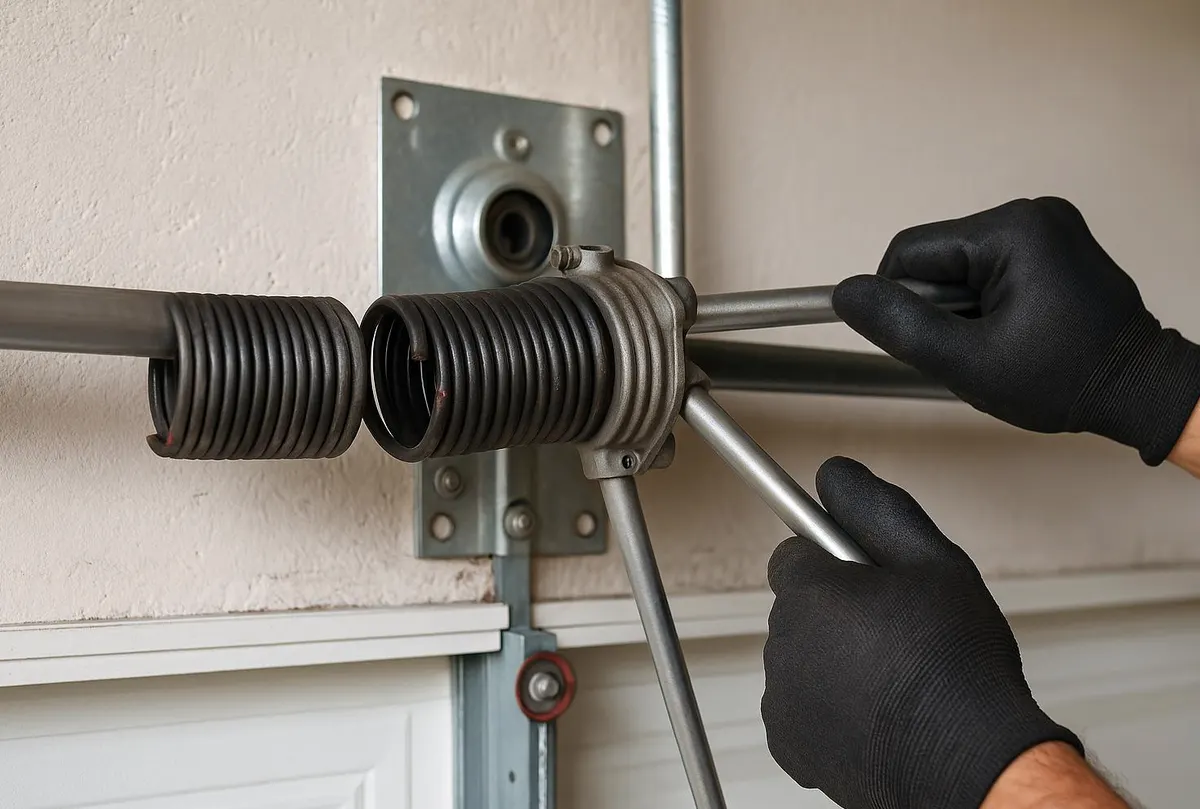
Metal contracts slightly in cold weather, and a spring that was already near the end of its life will often announce itself right about now — the door feels heavier when lifted by hand, and the opener works harder than it used to. Springs are under serious tension and aren't something to inspect or adjust yourself. A technician checks the coils for rust, gaps, or visible wear and the winding cones for damage. If a spring is marginal, the honest fix is replacement rather than a temporary adjustment, since cold weather tends to expose a spring that was already close to failing.
4. Track Alignment and Loose Fasteners
A season of temperature swings — hot humid summers into a sudden freeze — loosens the bolts and brackets holding the tracks in place. Rollers that were already borderline aligned bind harder once everything is stiff with cold. Nylon rollers can also go brittle and crack in freezing temperatures, while older metal rollers without bearings get rough and noisy. The fix is tightening brackets, realigning the tracks with a level, and swapping out rollers that are cracked or worn.
5. Opener Force and Limit Settings
If the door has been straining against ice or stiff hardware, the opener's force settings may be reacting incorrectly — either reversing too easily or, worse, pushing through resistance it shouldn't. Humidity can also fog or dirty the photo-eye safety sensors near the base of the tracks. A technician resets the force and travel limits and cleans the sensors once the mechanical issues above are resolved, so the opener is responding to the door's actual weight and movement rather than compensating for a problem that's already been fixed elsewhere.
6. Weatherstripping and Seal Condition Overall
Last, a technician looks at why water was getting under the door to begin with. Heavy rain, high humidity, and pine debris around the garage all wear down seals faster here than in drier climates, and a cracked or thin bottom seal is usually the root cause of repeat ice bonding. Replacing worn weatherstripping before the next freeze, and clearing pine needles or debris that trap moisture along the track base, prevents the problem from coming back every time the temperature drops.
When to Call Mt. Juliet Garage Door
If the door is grinding, reversing, or straining more than once or twice, or if it feels noticeably heavier when you lift it by hand, stop using the opener and call rather than keep forcing it. We'll check the bottom seal and spring tension first, since those cause the most damage if ignored, and we offer both Emergency Garage Door Service for a door that's truly stuck and won't budge, and seasonal Garage Door Maintenance to get tracks, hinges, and seals ready before the next cold snap or ice storm rolls through.
If your garage door is sluggish, frozen, or straining this winter, call Mt. Juliet Garage Door today — serving Mt. Juliet, Lebanon, Hermitage, Old Hickory, Donelson, Gladeville, Watertown, and the rest of Wilson County, TN.